A boat on land tells you more than a boat in the water.
Drive past any yard where vessels sit blocked up on timber and you start to see it. Faded gelcoat that looked glossy in the listing photos. A tarp pulled tight in some places, loose in others, collecting a shallow bowl of rainwater. Outboards tilted down, a faint line of oil staining the lower unit. A length of rope, still tied the way it was last used, stiff with salt.
This is where ownership spends most of its time.
The purchase gets the attention. The day it floats for the first time. The engine turning over clean. The quiet pride of having something that moves on water. What comes after that is less visible and far more consistent. A pattern of small, necessary costs that arrive whether you go out or not.
Start with the basics. Storage is rarely optional. If you are not keeping the boat in a marina, you need space at home or a yard willing to take it. Indoor storage costs more but slows deterioration. Outdoor storage is cheaper until the sun and rain begin to show you the difference. Even under a cover, the heat works its way in. Vinyl hardens. Seals dry. Wiring insulation becomes brittle.
A cover helps, but it is not a solution. It is a delay.
Water storage has its own version of this. Marina fees vary, but the logic stays the same. You are paying for access and for someone else to manage the risks you do not want to manage yourself. Security, docking, utilities, proximity to open water. It sounds convenient until the monthly bill becomes routine.
Then there is maintenance, which does not wait for problems to appear.
An outboard engine wants attention on a schedule, not on failure. Oil changes, gear oil checks, spark plugs, filters. Miss a cycle and you may not notice immediately. The engine will still start. It will still run. The difference shows up later, often at the worst possible time, when something small has compounded into something expensive.
Fiberglass hulls seem solid until you spend time around them. Small cracks form where stress collects. Water finds its way into places it should not be. Left alone, those small issues spread quietly beneath the surface. Repairs are not always dramatic, but they are rarely cheap.
Even the parts that look simple have a rhythm to them.
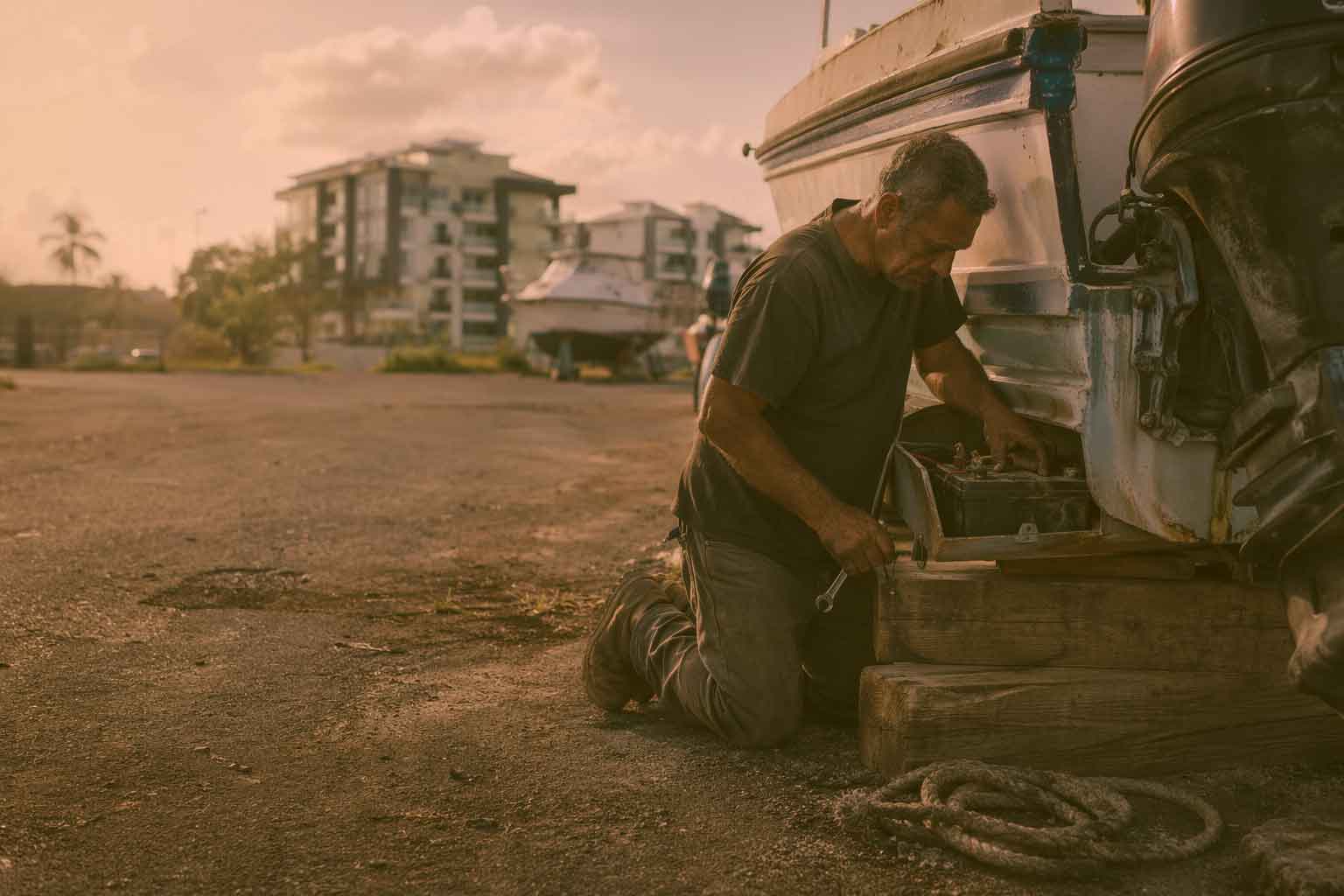
A battery that worked last month might not hold charge this month. Salt air settles into terminals and connections. Corrosion does not announce itself. It builds. You notice it when something fails to respond the way it should.
There is a smell that comes with it. Slightly metallic, mixed with damp.
Fuel is another layer people underestimate. Boats do not sip fuel. They move weight through resistance. A short trip can burn through more than expected, especially if conditions are not ideal. Add the cost of fuel to the cost of getting to the fuel, and it becomes part of the planning, not an afterthought.
Insurance sits in the background. You pay it hoping you never need it. Rates shift depending on usage, storage, and perceived risk. In areas where weather can turn quickly, that calculation changes. Coverage matters more when the environment is less predictable.
Then there is equipment.
Safety gear is not optional. Life jackets, flares, fire extinguishers, signaling devices. These expire. They need replacing whether they were used or not. Navigation equipment, if you rely on it, requires updates. Electronics age quickly. What felt current a few years ago begins to lag.
Some of these costs feel small on their own. Together, they form a steady baseline. Ownership is not defined by a single large expense. It is shaped by the accumulation of many smaller ones that repeat.
What is less obvious is how time becomes part of the cost.
A boat needs checking even when it is not in use. Covers need adjusting after heavy rain. Lines need retying. Systems need running just to keep them from seizing. Leave a boat alone for too long and it starts to show it. Not dramatically at first. A small issue here. A delay there. Then a weekend that was meant for the water turns into a day of sorting things out.
You begin to understand that ownership is not passive.
There is also a particular kind of decision making that comes with it. You learn to spot what can wait and what cannot. A minor cosmetic issue can be deferred. A fuel line that looks worn cannot. A strange vibration might be nothing, or it might be the beginning of something that will strand you if ignored.
That judgment develops over time, usually through experience rather than instruction.
Resale is often brought up as a way to soften the picture. Boats hold value, people say, if they are maintained well. That is true in a narrow sense. A well kept boat will sell more easily than a neglected one. But depreciation still exists. The market shifts. Newer models introduce small improvements that make older ones feel dated. Buyers become selective.
Condition matters, but so does timing.
None of this means boat ownership is a poor decision. It means it is a specific kind of commitment. One that extends beyond the initial purchase and into a cycle of care, cost, and attention that does not pause.
There is a moment that tends to clarify things.
You arrive at the boat with the intention of heading out. The weather is right. The water is calm enough. You step aboard and notice something small that needs fixing before you leave. Maybe it is a loose connection. Maybe the battery is weaker than expected. Maybe the bilge pump cycles longer than it should.
You pause.
That pause is where ownership lives. Not in the open water, not in the photos, but in the decision to address what is in front of you before you go any further.
People talk about boating seasons as if there are four. In practice, there is another one layered over everything else. It does not follow the calendar. It runs alongside it.
The time spent maintaining, checking, adjusting, and paying.
It does not have a name most people use, but it shows up consistently enough to define the experience.
You start to recognize it after a while.