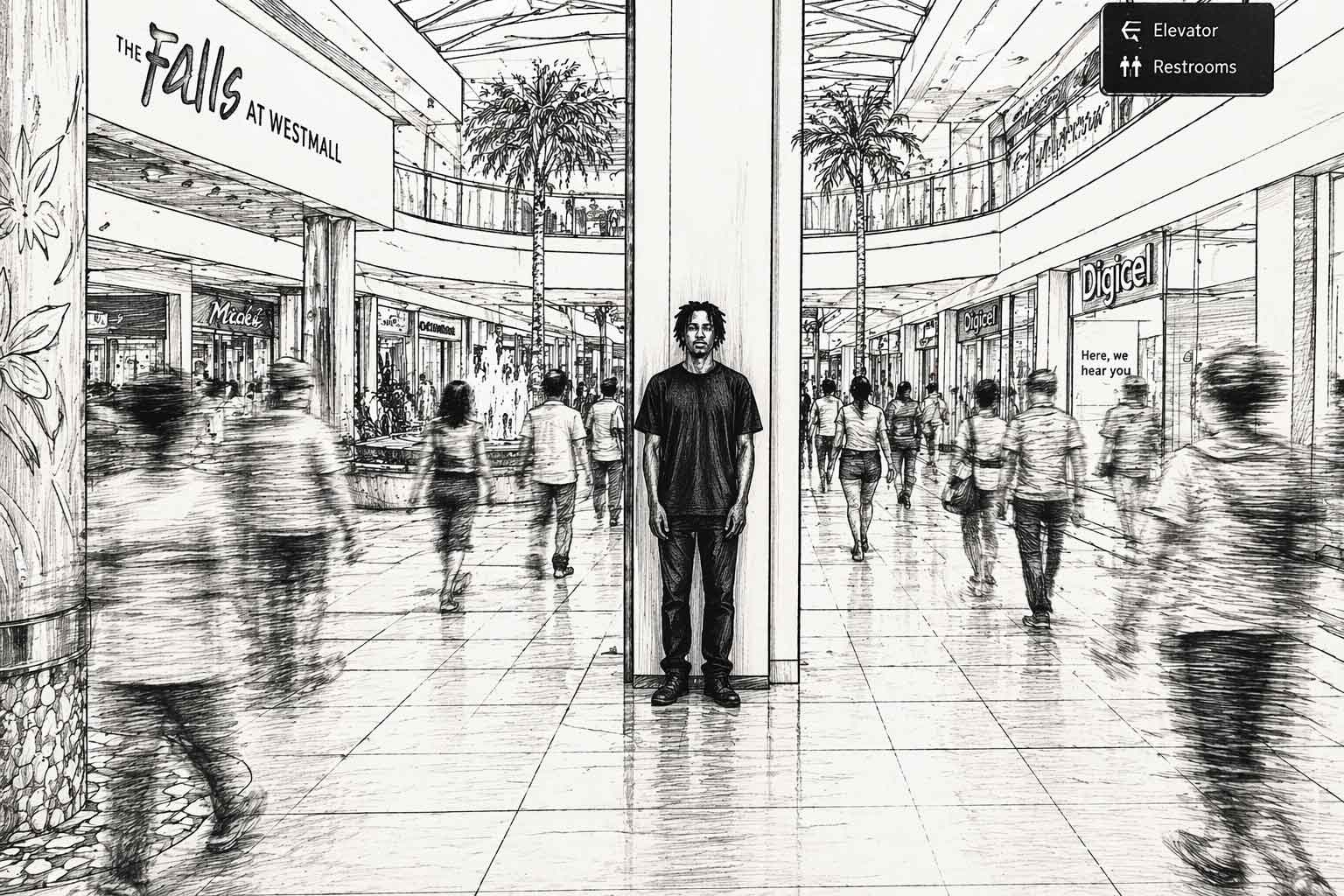
By nine in the morning, the line at FCB San Juan is already long. A man in front of me counts cash twice before he reaches the teller. Behind me, a woman scrolls through WhatsApp, pausing on a voice note and replaying it with the phone close to her ear. You can hear the faint spill of someone promising delivery by Thursday. She nods, almost to herself.
This is the part that matters. The economy is already running. The bank just isn't seeing it.
A woman like her can clear five thousand dollars in a good month selling custom cakes out of a kitchen that does not exist on paper. Orders come in as short messages. "Two-tier, blue icing." "Need it by Sunday." Payment lands in pieces. A transfer here, a bit of cash when someone passes through. There are no invoices in the format a bank wants. No formal ledger. Still, nothing goes missing. Cakes go out on time. People come back.
She walks into that same bank and asks for a small loan. Five thousand to buy ingredients before prices move again.
The answer is no.
Not because she cannot repay it. Because the system has no way to recognize that she will.
That is the gap. It is not risk. It is recognition.
We pretend this is a fringe case. It is not. Step outside any formal storefront and the pattern repeats. WhatsApp is the catalogue. Instagram is the storefront. Payment is whatever works that day. The receipts exist, just not in a format that survives contact with a loan officer's checklist.
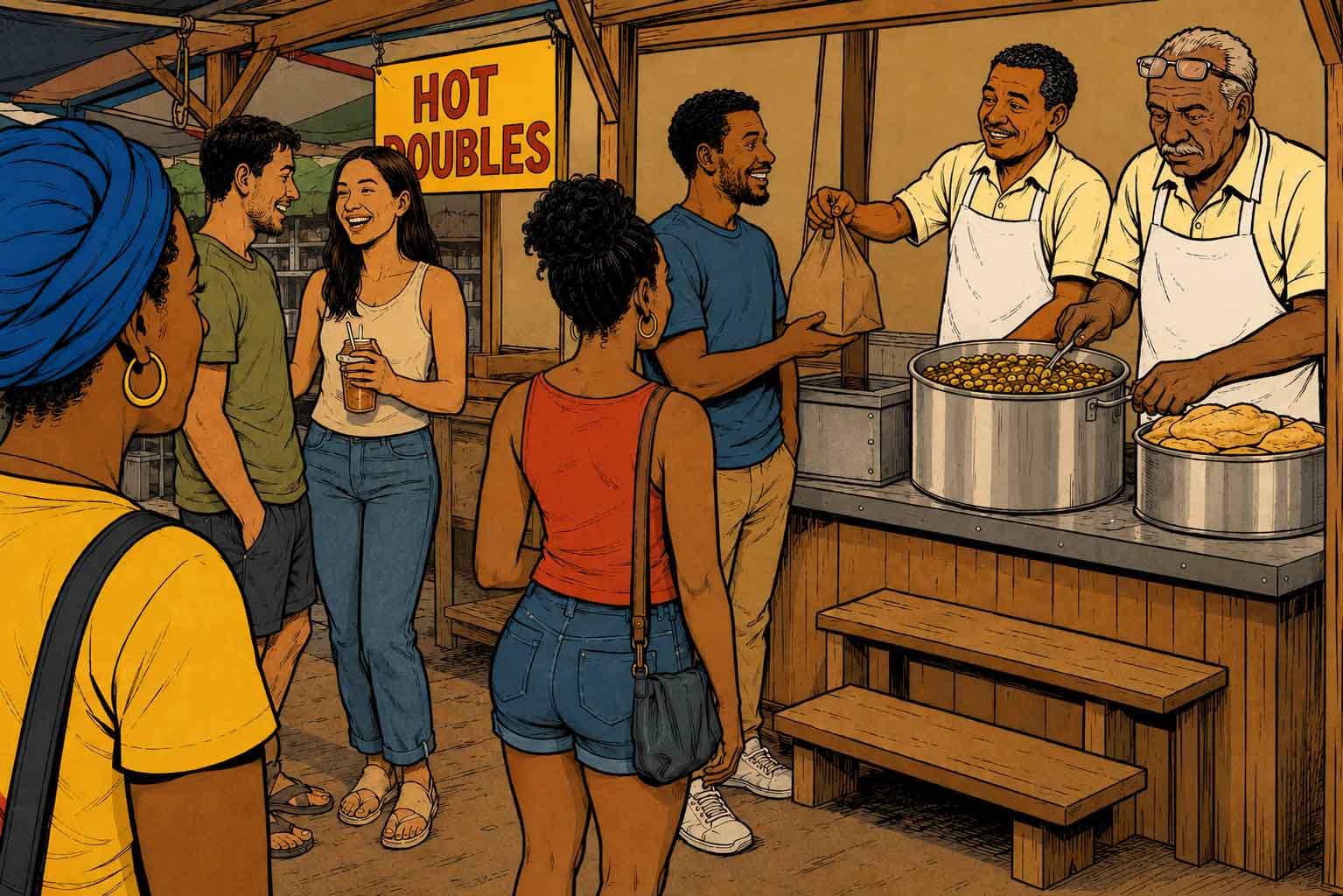
A vendor in Central Market keeps track without writing anything down. She knows who buys on a Saturday and who only asks questions. She knows which customer will say "next week" and mean it. That knowledge is precise. It is tested weekly. It decides who gets a little credit when money runs short.
None of it enters a database.
We have adopted a financial system that trusts paperwork over behaviour. That is a choice, not a necessity.
The idea that matters now is simple. Watch what people actually do.
An algorithm does not need to read the words inside a WhatsApp chat. It can watch the rhythm instead. How often a seller responds. How quickly a question becomes a purchase. Whether payments arrive when they are supposed to, even if they arrive in fragments. Patterns settle over time. The noise thins out.
You begin to see the difference between someone who asks about ten items and buys one, and someone who asks once and always follows through. You see the late payer who is consistently late, and the late payer who is late once and corrects it the next day. You see repetition, and repetition is reliability.
This is not abstract. It is what the market vendor has always done, just at a larger scale and with a longer memory.
The point is not to replace that instinct. The point is to record it.
If you let the system observe long enough, it reaches a quiet conclusion. The woman who orders chicken every Thursday for her roti shop has never failed to pay, even when the messages around those transactions are messy and incomplete. That consistency is more meaningful than a clean set of documents that say very little about how she behaves under pressure.
Showing up counts. It has always counted.
A loan decision built on that would look different. Not generous. Not reckless. Just accurate. Some people still get turned down. Others, who have been invisible until now, get a chance on terms that reflect how they actually operate.
The cake seller gets her five thousand. She buys early. She sells through. She pays it back. Next time, the system does not start from zero.
None of this requires a better banker. It requires a different input.
There is a risk, and it sits quietly in the background. The same system that learns to see people properly can also become another closed door. If the model is built elsewhere, trained on local behaviour, and owned at a distance, then the judgment leaves with it. The logic becomes harder to question. The trust people built between each other becomes raw material.
That is not a technical issue. It is control.
Back in the line, the woman ahead of me sends a final message. "Yes, confirmed for Sunday." A small pause, then a reply comes in. She smiles, not broadly, just enough.
A transaction just closed. No paperwork. No recognition.
The system will call her unproven.
It is wrong.